Loading ...
Your massage has been succesfully sent! We will contact you as soon as possible. Thanks!

Treatment in Germany - see top hospital ratings and lists of best specialists, up-to-date information prices adresses and contacts

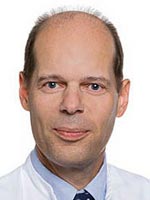
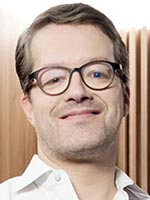
About MD C. Topar
MD Topar as an orthopedic surgeonis primarily committed to pain medicine. His motto: Surgery is only performed when it is absolutely necessary - this is why pain therapy also plays such a major role for this extraordinary specialist.
Our declared goal is the way to freedom from pain - even without surgery. Our principle: prevention - therapy - aftercare.
We see ourselves as a solution between the two pillars of orthopedics that have so far still often predominated: on the one hand, conservative treatment with painkillers and physiotherapy, on the other, surgery. We fill the gap in between. Our approach: As much as necessary, but as little as possible.
We also carry out non-operative interventions according to the most modern international standards on patients suffering from diseases of the spine (such as herniated discs, slipping vertebrae, spinal canal stenosis, facet joint problems), pain and osteoarthritis of joints such as elbows, hips, knees, shoulder and ankle or sports injuries to have.
These interventions are combined with medically supervised exercise therapies to restore patient mobility - especially for those who might otherwise have had to undergo surgery.
The focus is on the demands and the lifestyle of the patient with his illness. That means: In addition, for example, eating habits and workplace conditions are examined carefully and, if necessary, jointly analyzed to determine where optimization can be done. Together with the patient, Dr.Topar and his team have specific strategies to deal with the individual pain (e.g. back pain). The advantages of certain treatment methods are discussed and possible risks are weighed. This clear analysis of options (conservative, interventional, or surgical) - from prescribing medication to minimally invasive therapy, to physiotherapy, psychotherapy to acupuncture to major surgery (which is certainly inevitable in some cases) - helps the patient gain control over and taking responsibility for one's condition and making a decision.
It is also a declared goal that the patient gets to know his own body better.We value personal advice that is individually tailored to the patient. With us everything is under one roof, i.e. short distances from diagnostics to therapy.
MD Topar is a member of the board of the German Society for Spine Therapy (DGWT) and a founding member of the GIW, as well as a member of the International Spine Intervention Society (SIS). He and his team keep themselves up to date and use the most modern therapies.
We successfully offer treatment using medicinal or physical therapies (so-called conservative therapies) in our practice. These procedures completely dispense with surgical measures. Physiotherapists and masseurs in particular use them regularly for the therapy of their patients. Physical therapy users work among other things. with direct current or infrared light.
Conservative therapy consists of chiropractic / manual therapy, extracorporeal shock wave therapy, magnetic field, laser, arthrosis, osteoporosis, rheumatism, infusion, injection with hyaluronic acid, needling and punctures of calcifications as well as trigger point treatment. You will also receive acupuncture and kinesio taping.
We offer a variety of conservative therapies that relieve pain and would be happy to advise you on our diverse therapy methods, such as osteoarthritis therapy.
Our focus is on minimally invasive treatments on the spine and joints. The patient can only be relieved of his symptoms reliably and for a long time - or even permanently - by precisely determining the source of pain. We always carry out precise injections, as a single nerve can be responsible for the symptoms that occur.
We offer minimally invasive interventions on the spine: catheter technology, radio frequency therapy, discography, methylene blue injection, intradiscal electrothermal therapy (IDET), facet injection, transforaminal epidural injection, injections under ultrasound and ramus injection. We also perform ISG injections, caudal injections and diagnostic test infiltrations. Minimally invasive interventions on the joints include joint injections (e.g. knee, shoulder, elbow, thumb saddle joint) and joint irrigation / lavage.
The various therapies are promising, low-risk and gentle. Usually they are performed under local anesthesia. As back specialists, we will be happy to inform you about the different procedures and their duration of action and treatment.
The indication for such an injection is facet syndrome. This is a pain picture that is caused by changes in the small vertebral joints and leads to chronically recurring, mechanical back pain. With facet injections, a special needle is guided to the vertebral joints (facets) to be treated and then pushed through the joint capsule into the vertebral joint. A mixture of local anesthetic, isotonic saline and a cortisone preparation is injected into and around the joint. The injection takes place under sight with the help of an image intensifier. The facet injections are carried out two to three times with an interval of 5-7 days.
In the case of a transforaminal injection, the drug is applied together with a contrast agent with a view of the immediate vicinity of the pain-causing spinal nerve and its root.
Here, too, there is a second injection at the same point every 5-7 days. Indication of a transforaminal injection are pain symptoms with a radicular spread, i. H. a pain distribution that can be precisely assigned to a particular nerve, its course and the structures it supplies.
Carrying out a ramus injection (ramus: lat. "Branch", departure of a small nerve root, ie the smallest nerve) is both a diagnostic and therapeutic precision procedure. With this approach, small amounts of nerve branches that innervate the facet joints are targeted Local anesthetic injected. If there is then a significant reduction in pain / freedom from pain for a short time, these vertebral joints or the nerves supplying them are responsible for the pain symptoms. If the procedure does not change the symptoms, the source of pain must be different.
An essential indication for a diagnostic medial branch block (small branch of a nerve) is to find out whether the symptoms can be assigned to these facet joints that are innervated by these nerves. If the medial branch block is positive (freedom from pain for a short time), we use z. B. the radio frequency therapy. With ramus injections, in addition to the local anesthetic, we inject a mixture of table salt and steroid, which unfolds its anti-inflammatory effect.
In this therapeutic approach, we inject a local anesthetic into the sacroiliac joint (also known as the sacroiliac or sacrum joint: connection between the coccyx and pelvis), which is suspected to be the cause of pain. After the injection, you will be asked to be vigilant about any change in your pain symptoms.
If there is no relief from the discomfort, the injected joint can be excluded as the cause of the pain. If you are completely free of pain for a short time, the source of the pain has been identified and further therapy can take place.
In a therapeutic ISG injection, in some cases a mixture of local anesthetics and cortisone is applied to achieve an immediate anti-inflammatory effect. Another injection is usually required after a week.
For a caudal injection, lie prone on a couch. The lower opening of the spinal canal, which is located in the sacrum (known as the sacral hiatus), is identified with the help of a C-arm (image intensifier). After surgical disinfection and sterile draping under local anesthesia, we insert a needle into this opening in the spinal canal, through which a contrast agent is administered. We observe this process with the image converter in real time. If the agent distributes itself in the spinal canal as expected, the saline-steroid mixture can be injected. After the injection has been completed, you remain in the prone position for another 2-3 minutes so that the injected medication can spread further in the spinal canal. Every week we do the injection again.
Caudal injections are used by back specialists for a variety of painful lumbar syndromes (lower back pain) with different causes. Possible reasons for an injection are pain caused by protruding or herniated discs, inflammation of the vertebral joints or scarring, surgical interventions and bottlenecks in the spinal canal (spinal canal stenosis) of the lower two intervertebral disc segments (L4 / 5 and L5 / 51).
Submit a Request