Loading ...
Your massage has been succesfully sent! We will contact you as soon as possible. Thanks!

Treatment in Germany - see top hospital ratings and lists of best specialists, up-to-date information prices adresses and contacts
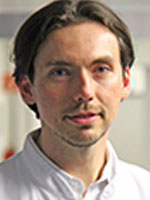
About MD S. Grossauer
The Clinic for Neurosurgery treats diseases and injuries of the nervous system as well as parts of the body which provide a protective covering for the nervous system, i.e. the brain, the skull, the medulla, the spinal cord and the peripheral nerves.
The range of surgery at the Clinic includes treatments for brain tumours, brain haemorrhages and brain injuries (craniocerebral trauma) as well as very common spinal diseases: slipped discs, narrowing of the spinal canal (spinal canal stenosis), instabilities and malpositions such as spondylolisthesis (slipped vertebrae or vertebral slipping), scoliosis, spinal cord and spine tumours as well as spinal injuries.
These operations are consistently carried out with the use of gentle techniques such as microsurgery, which allow surgery to take place through increasingly smaller incisions (keyhole surgery). Added to this are other high-tech procedures such as neuronavigation. This method, which was first applied in 1995 at the Clinic for Neurosurgery in Frankfurt a.M. Höchst one of the first clinics in Germany to use this method – makes it possible to operate on brain tumours with the utmost precision through increasingly smaller openings in the skull, right down to 1 cm in length. Microsurgery is complemented by fluorescence microscopy (ALA fluorescence-guided microsurgery, the aminolevulinic acid method), which allows malignant brain tumours to be made visible to such a degree that even the most subtle dendrites in the brain tissue are displayed. As a result, the radical effects of the operation are improved.
The Clinic for Neurosurgery has three main areas of focus: diseases of the skull and the brain, diseases of the spinal column, of the invertebral discs, of the spinal cord as well as diseases of the peripheral nerves.
One primary focus of the Clinic for Neurosurgery is surgery performed on the skull and the brain, in particular brain surgery. There are many diseases of the brain and the skull that require surgical treatment. All these diseases are treated at the Clinic for Neurosurgery. They include brain tumours, brain metastases (tumour cell disseminations from cancerous diseases located in other organs of the brain), brain haemorrhages, cerebrovascular diseases such as aneurysms or arteriovenous malformations, congenital malformations or injuries and disorders resulting from accidents.
For this purpose it is almost always necessary to open up the skull. Thanks to modern, innovative techniques such as microsurgery and neuronavigation, it is now possible to create extremely small openings. These small incisions are referred to as minimally invasive surgery or so-called key hole surgery. This is made especially possible by means of neuronavigation. This innovative technology had already been tested in our clinic prior to 1995 by means of prototypes, when we became one of the first hospitals in Germany to implement fully functional neuronavigation.
A further primary focus is the microsurgical treatment of degenerative disc diseases, spinal diseases and diseases of the spinal cord.
Surgery for the treatment of slipped discs is always performed microsurgically if an endoscopic treatment option is ruled out. This not only provides the opportunity of a smaller incision and less pain as well as adhesions - it also enables specialists to work on narrow spinal nerves which are only a few millimetres in diameter, by providing an up to 40-fold magnification. It goes without saying that thereby the risk of nerve injuries is significantly lower than during operations performed with the naked eye.
In cases of osteoporosis and osteoporotic vertebral fractures, cement injected through the skin and into the vertebra by means of a needle (vertebroplasty) often suffices. If the vertebra is additionally straightened via the needle using a balloon or a stent, this is referred to as kyphoplasty. Sometimes is nevertheless necessary to perform surgery, if the spinal canal is severely constricted by a bone fragment. All these procedures are carried out and are available to our patients.
In addition to the main focus areas, our range of services includes all standard surgical procedures for diseases of the peripheral nerves. All these interventions are carried out microsurgically, which also makes it possible to remove fine adhesions without damaging highly sensitive nerve fibres.
Due to the fact that nerve injuries are often combined with other injuries, our clinic cooperates closely with Accident Surgery and especially the Hand Surgery unit at Klinikum Frankfurt Höchst. In cases of nerve tumours, a part of the nerve often has to be sacrificed, i.e. partially removed, in order to conserve the healthy parts. If the resulting defect is not too severe, it can be bypassed by means of a nerve transplant. Skin nerves are used for this purpose, most commonly the sural nerve, which supplies the lateral sole of the foot and is therefore not considered to be as important as, for instance, a hand nerve.
Submit a Request