Loading ...
Your massage has been succesfully sent! We will contact you as soon as possible. Thanks!

Treatment in Germany - see top hospital ratings and lists of best specialists, up-to-date information prices adresses and contacts
About Prof. MD C. Stief
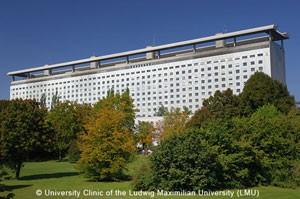
Welcome to Ludwig-Maximilians University Clinic in Munich – the University in the heart of Munich. LMU is recognized as one of Europe’s premier academic and research institutions. Since our founding in 1472, LMU has attracted inspired scholars and talented students from all over the world, keeping the University at the nexus of ideas that challenge and change our complex world.
The Hospital of Munich University is located at the very core of Bavaria and is one of the biggest university clinics in Europe. The facility complex, consisting of two big campuses located in the city centre and Grosshadern district, offers high level medical expertise and innovative research.
In 2012 approximately 500,000 patients were treated as inpatients, outpatients, and daycases at the downtown and Grosshadern campuses of the Medical Center of the University of Munich. Its 45 specialist clinics, institutes, and divisions have more than 2,000 beds at their disposal. There are about 1,800 doctors from a total of nearly 10,000 employees. Research and teaching make it possible to provide the highest medical standard in patient care. In 2012 the Medical Center received ca. 78 million euros in third-party funding and since June 2006 has been a statutory public body.
With more than 2,200 beds, the hospital is a medical institution of maximum supply level. It is one of the largest hospitals in Germany and Europe. The hospital is a center for medical research and development, but it is equally important to have an emphasis on giving the patients individual attention, security and care. Employees of the Medical Center represent 90 countries. Hospital and Medical Faculty activity support patient care and research programs in several countries around the world.
Below you will find the general information about the clinical departments. For more information, please contact our international office.
The Prostate Center at the University of Munich offers a unique combination of interdisciplinary diagnostic and therapeutic possibilities with use of modern, partly only in studies available, medication and technical procedures. Through the close coordination of experts from various disciplines in joint visits, conferences and consultations can be set individually for each patient the optimal strategy. It will be covered here all diseases of the prostate: the prostate cancer, benign prostatic hyperplasia and prostatitis.
The minimally invasive robotic-assisted surgery (DaVinci) is applied at our clinic on a large scale.
The Department of Urology cooperates closely with the Urogynecology and Coloproctology Department as well as the Department of Visceral and Vascular Surgery, Minimally Invasive Surgery Department and Oncology Department.
Our team is committed to high quality of medical treatment and transparency of its business processes. If you have questions concerning further treatment at our hospital, please call!
In cases of prostate cancer, the use of active surveillance (or ’watchful waiting’) can delay or prevent entirely the need for a radical operation that – despite improved surgical techniques – can cause incontinence and impotence. It should not be underestimated, however, how stressful it can be knowing you have cancer but not actively doing anything about it.
Professor Stief: The same criteria apply as for the clinical trial on active surveillance: the PSA level should be no higher than 10 ng/ml; the Gleason score (a histological grading system indicating the stage of prostate cancer) should be no higher than six; a maximum of only three biopsies should return positive results; the prostate may only be of a certain size and no preliminary treatment of urethral stricture should have taken place – all these criteria indicate the presence of a localised and slow-growing prostate tumour. An MRI scan is also carried out to determine the precise size and location of the tumour. The data for all European hospitals participating in the study is evaluated centrally by a team of highly regarded experts. If the patient proves suitable for focal therapy, the tumour is identified and can then be removed with pinpoint precision.
Professor Stief: The actual therapy is performed on an inpatient basis involving a single overnight hospital stay. On the day before the operation, the patient is seen by the anaesthetist; on the day of treatment itself, the approx. 90 minute operation is carried out under general anaesthetic. During the operation, a substance is delivered to the tumour that can be activated by a laser, completely destroying the blood vessels that supply nutrients to the tumour. This causes a circumscribed tissue defect that will ideally encompass the entire primary cancer. The patient is then able to leave the hospital the same day after only a short stay in the recovery room.
Professor Stief: Patients usually report only minor or moderate complaints such as a burning sensation while urinating and/or a more frequent need to urinate for a few days after the operation. In exceptional cases, patients have difficulty urinating and have to be temporarily fitted with a catheter. Continence and potency are unimpaired and the patient can return to work just one day after treatment.
Professor Stief: The patient must be continually monitored as part of the treatment and should return to us for a check-up every three months for a period of two years. Monitoring PSA levels after the operation tells us less because the bulk of the PSA-producing prostate tissue is preserved. Cross-sectional imaging is the most important tool for evaluating the post-operative situation (MRI: after a week, after 12 and 24 months). A punch biopsy is carried out after one year and again after two. The data gathered in the phase II clinical trial (40 patients) is extremely encouraging: in all cases in which at least 80 per cent of the target volume that was treated is shown to have declined in the post-operative crosssectional imaging, there have been no cases of remaining tumour tissue. Continence and potency are also completely preserved. Should there be evidence of remaining tumour tissue, options include further focal therapy, traditional radiotherapy and radical surgery.
Submit a Request